



By Habari News
PHOENIX — A decade after voters approved Transportation 2050, Phoenix is highlighting expanded light rail service, hundreds of new bus shade structures and substantial street improvements funded through the city’s long-term transportation program.
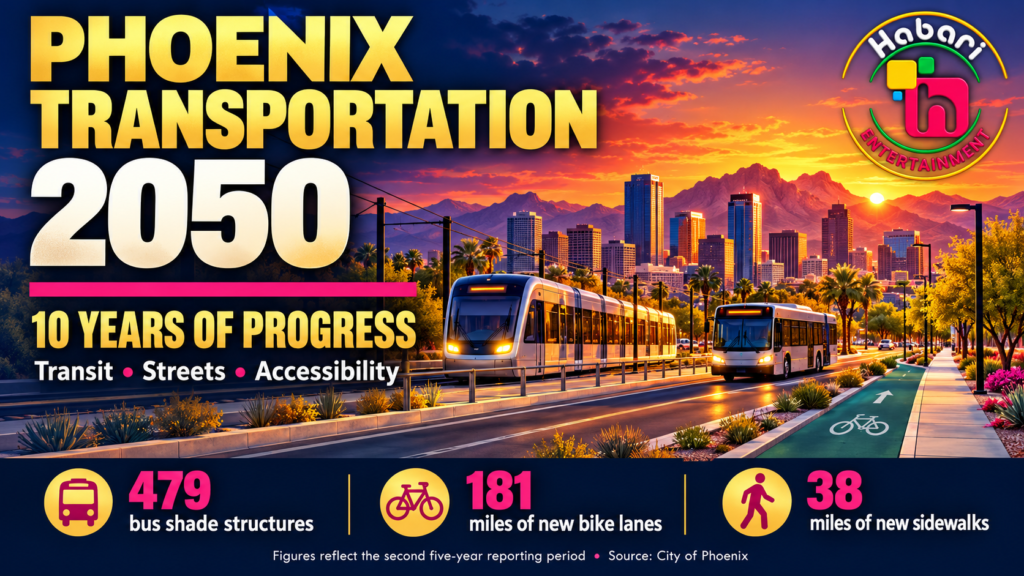
The city’s Long-Term Performance Metrics report details progress during the program’s second five-year period. Among the reported improvements are 181 miles of new bicycle lanes, 38 miles of new sidewalks and 20,191 new or updated accessible ramps.
Approved by Phoenix voters in 2015, Transportation 2050, commonly called T2050, is a 35-year plan to improve public transit and street infrastructure as the city grows.
Bus and Light Rail Investments Expand Service
During the five-year reporting period, Phoenix recorded 81.2 million bus boardings and 29.4 million light rail boardings. Those figures represent trips taken, rather than the number of individual riders.
The city also reported installing 479 bus shelter shade structures, providing additional protection from the sun for people waiting for service.
More than six miles of light rail extensions contributed to a new two-line regional light rail system. Other transit investments included technology improvements and upgrades to fare payment and collection systems.
Phoenix is also changing how its buses are powered. According to the city, renewable natural gas fuels a majority of the bus fleet. A pilot program includes 12 battery-electric buses, with dedicated charging infrastructure underway.
Mayor Kate Gallego said the investments have helped improve traffic flow, accelerate street maintenance and expand transportation options. She also emphasized accessibility and roadway and sidewalk safety as continuing priorities.
Street Improvements Address Drivers, Cyclists and Pedestrians
The report outlines a range of street infrastructure improvements during the same five-year period:
| Reported improvement | Total |
|---|---|
| Traffic signals | 127 |
| Left-turn arrows | 252 |
| New bicycle lanes | 181 miles |
| New or updated ADA ramps | 20,191 |
| New sidewalks | 38 miles |
| Local and arterial pavement overlays | 407 miles |
The accessible ramps support travel for people with disabilities, including those who use wheelchairs and other mobility devices.
Phoenix also reported investments in intelligent transportation systems designed to improve traffic management and traffic signal reliability.
Councilwoman Debra Stark, chair of the Transportation, Infrastructure and Planning Committee, said the program’s progress has been rewarding while emphasizing that additional work remains as the city grows.
Survey Finds Support for Revenue Use
Recent survey results cited by the city found that 75 percent of respondents were satisfied with how Phoenix uses T2050 revenue.
The release did not provide the survey’s sample size, methodology or field dates. The finding reflects the respondents surveyed and should not be interpreted as a measure of every Phoenix resident’s opinion.
City officials said continued community engagement will help guide transportation investments as residents’ needs change.
Citizens Transportation Commission Chair David Moody emphasized the commission’s role in listening to community priorities and helping shape improvements to streets and public transit.
A Milestone in a Longer Plan
The first decade represents an early milestone in T2050’s 35-year effort. Phoenix officials describe the completed investments as a foundation for a transportation network that can adapt to population growth while improving reliability, accessibility and safety.
The next phase will build on those gains, with continued attention to transit service, street conditions and connections for people traveling by bus, rail, bicycle, car or on foot.
Residents can review the city’s Long-Term Performance Metrics report and watch community members discuss T2050’s impact.
Source: City of Phoenix release, “Phoenix Marks 10 Years of Transportation 2050 Progress.” Figures reflect the program’s second five-year reporting period.



More Stories
Phoenix Councilwoman Ann O’Brien Welcomes City’s Role in 2028 Olympic Torch Relay
IMF Warns Mongolia’s Spending Plans Could Fuel Inflation Despite Mining Boom
Suspect Arrested in Phoenix Double Homicide Near 16th and McKinley Streets