




The U.S. Black Chambers, Inc. (USBC) is celebrating historic milestones in Black political representation following the 2026 midterm elections, while calling on newly elected leaders to prioritize Black-owned businesses, economic opportunity and generational wealth.
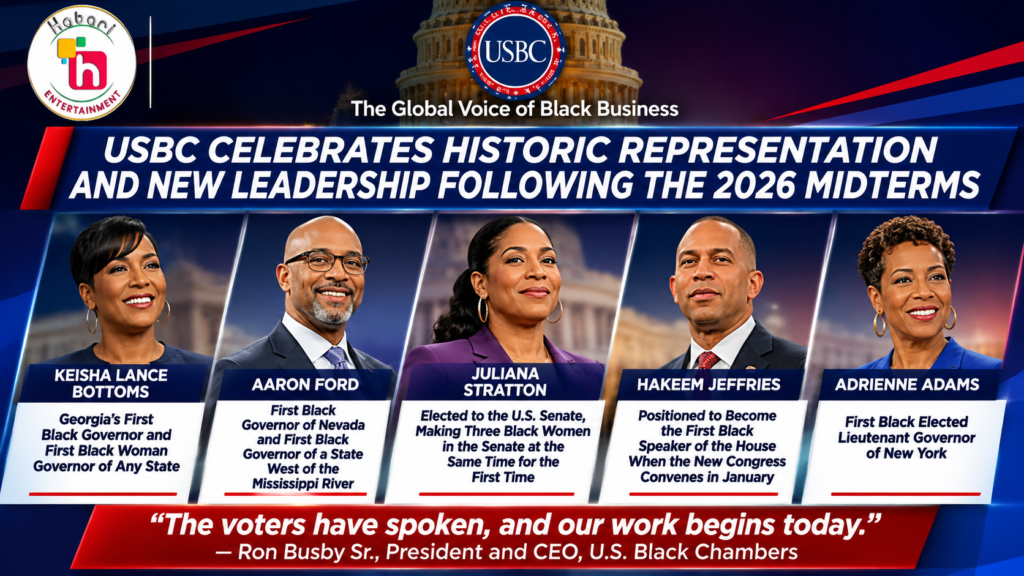
In its November 5 statement, USBC highlighted reported victories by Keisha Lance Bottoms in Georgia, Aaron Ford in Nevada, Juliana Stratton in Illinois and Adrienne Adams in New York. The organization also pointed to the possibility of Hakeem Jeffries becoming the nation’s first Black Speaker of the House.
USBC President and CEO Ron Busby Sr. emphasized the organization’s commitment to working across party lines.
“The voters have spoken, and our work begins today.”
Busby said the organization is prepared to work with both parties to help Black-owned businesses start, grow and pass their wealth to future generations.
Historic Political Representation Takes Center Stage
According to USBC’s announcement, the 2026 elections produced several significant milestones.
Keisha Lance Bottoms was identified as Georgia’s first Black governor and the first Black woman elected governor of any U.S. state.
Aaron Ford was recognized as Nevada’s first Black governor and the first Black governor elected in a state west of the Mississippi River.
In Illinois, Juliana Stratton’s reported U.S. Senate victory would mean three Black women serving simultaneously in the Senate for the first time.
The organization also highlighted Adrienne Adams’ reported election as New York’s first Black lieutenant governor.
Meanwhile, with control of the U.S. House changing hands, Democratic leader Hakeem Jeffries is positioned to potentially become the first Black Speaker of the House when the 120th Congress convenes in January 2027.
Jeffries’ selection would depend on the House speaker election, rather than the midterm results alone.
USBC Shifts Focus Toward Black-Owned Businesses
While acknowledging the political significance of the election, USBC made clear that its primary mission remains economic empowerment.
The organization plans to advocate for policies addressing federal contracting, affordable health insurance, employee ownership, and business succession.
Federal Contracting and Equal Opportunity
USBC argues that Black-owned businesses face persistent obstacles when competing for federal contracts.
Although the federal government is the world’s largest purchaser of goods and services, many Black-owned firms participate primarily as subcontractors rather than prime contractors.
The organization is calling for greater transparency about which businesses receive federal contracting dollars, including awards at every subcontracting level.
USBC also wants faster payments for small subcontractors and more efficient certification processes.
These changes, the organization argues, could help Black entrepreneurs compete more effectively and build sustainable companies.
Affordable Healthcare for Small Businesses
Healthcare affordability is another major priority.
USBC says small employers frequently face higher health insurance costs and fewer coverage options than larger companies.
The organization plans to advocate for policies that make healthcare more affordable for entrepreneurs, their employees and their families.
Lower healthcare costs could help smaller businesses recruit employees, retain experienced workers, and compete with larger employers.
Employee Ownership and Generational Wealth
USBC also intends to promote employee ownership as a strategy for preserving businesses and building community wealth.
Employee ownership models can allow retiring entrepreneurs to transfer their businesses to workers while keeping jobs and economic activity in local communities.
However, access to financing remains a significant challenge.
USBC is calling for expanded financial tools that make employee ownership transitions more accessible.
Preparing for the Silver Tsunami
Another priority is addressing the growing number of business owners approaching retirement, a demographic shift often described as the silver tsunami.
As longtime entrepreneurs prepare to leave their businesses, many face difficult decisions about selling, transferring ownership, or closing their companies.
For Black-owned businesses, these transitions can have lasting consequences for local employment and community wealth.
USBC plans to support succession planning, train prospective buyers, and advocate for increased access to capital.
The goal is to ensure successful businesses remain operating and continue contributing to their communities after their founders retire.
Ron Busby Sr. Calls for Bipartisan Cooperation
USBC President and CEO Ron Busby Sr. said the organization is ready to begin working with the incoming Congress and newly elected state leaders.
“We congratulate every leader elected this week, and we are ready to work with both parties to build an economy where Black-owned businesses can start, grow, and pass on what they have built,” Busby said.
His remarks reflect the organization’s emphasis on policies that support entrepreneurship regardless of which political party holds power.
The incoming 120th Congress will face important decisions involving small-business financing, federal contracting, healthcare and economic development.
USBC intends to ensure Black entrepreneurs have a voice in those discussions.
Political Milestones and Economic Opportunity
The 2026 midterm elections represent an important moment for the political representation highlighted in USBC’s statement.
However, the organization argues that representation must also translate into meaningful economic progress.
Expanding access to capital, improving federal contracting opportunities, lowering business operating costs and protecting generational wealth are among the priorities USBC wants elected officials to address.
For Black business owners across the country, the challenge now is turning political change into lasting economic opportunity.
Habari Entertainment will continue covering the incoming Congress, historic political representation, and the policies affecting Black-owned businesses nationwide.
Source: U.S. Black Chambers, Inc., November 5, 2026, official statement.
Habari Entertainment | News Our Way.
Editorial note: The election milestones above are attributed to USBC’s release. They should be independently verified against certified or authoritative election results before publication, particularly the historical firsts and the pending House speakership.



More Stories
Phoenix Councilwoman Anna Hernandez Demands Justice for 16-Year-Old Ma’liea Greer, Calls for End to Charging Children as Adults
Phoenix City Council Approves Rio Salado District Plan, Paving the Way for Major River Corridor Transformation
70-Year-Old Woman Killed in Phoenix Camelback Road Crash