
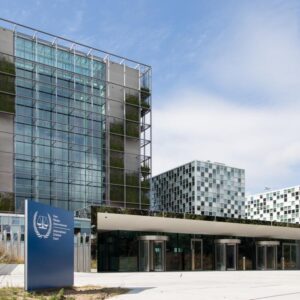




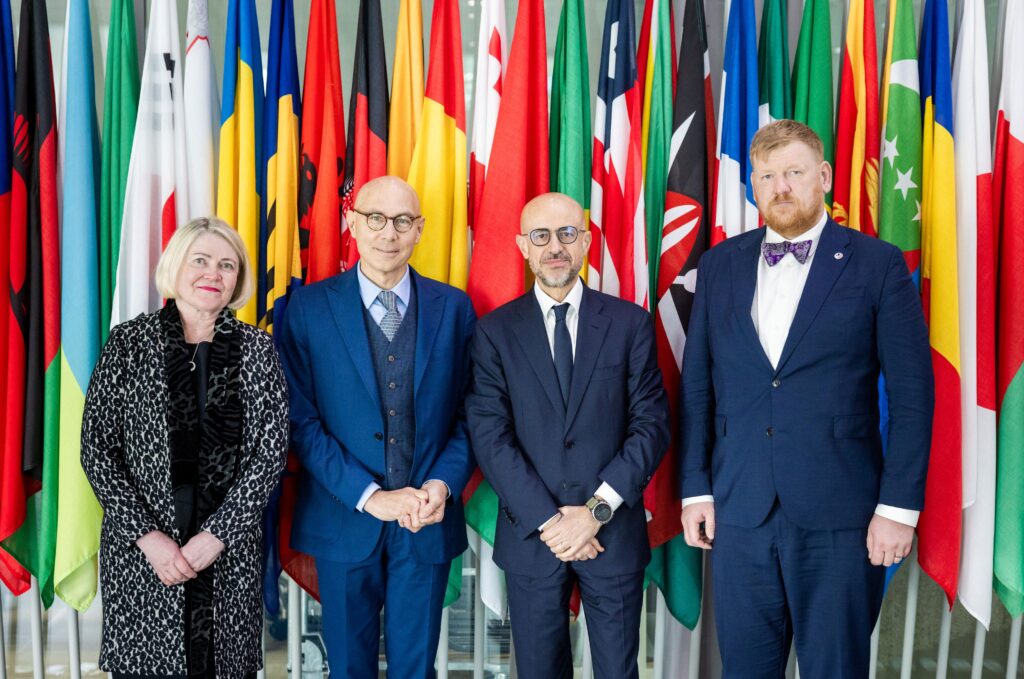
THE HAGUE, Netherlands — November 4, 2026 — International justice leaders, human rights advocates, victims’ representatives, and young people gathered at the International Criminal Court (ICC) on November 3 to discuss how accountability for serious international crimes can help protect future generations and prevent future atrocities.
The event, titled “International Criminal Justice: For the Sake of Future Generations,” was convened by Ambassador Päivi Kaukoranta, President of the Assembly of States Parties to the Rome Statute, in cooperation with the Trust Fund for Victims.
Held at the ICC headquarters in The Hague, the gathering emphasized the importance of international accountability, victims’ rights, reparations, and preserving the memory of atrocities to help build a more peaceful future.
UN Human Rights Chief Warns of Lasting Consequences of International Crimes
United Nations High Commissioner for Human Rights Volker Türk delivered the keynote address, emphasizing that the consequences of serious international crimes often extend far beyond those directly affected.
Türk focused on the lasting harm caused by atrocities and the importance of intergenerational justice, arguing that accountability is essential to protecting human rights for future generations.
He also stressed the need to defend international institutions responsible for investigating and prosecuting serious crimes.
“If accountability is to protect present and future generations, we must defend the institutions that make this possible.”
Türk described the International Criminal Court as an essential component of the international human rights system.
His remarks reinforced the importance of international cooperation in ensuring that individuals responsible for the gravest crimes can be held accountable.
ICC Officials Emphasize Accountability and the Rule of Law
Following the keynote address, Judge Rosario Salvatore Aitala, First Vice-President of the International Criminal Court, delivered remarks addressing the role of international justice.
A panel discussion featured ICC Deputy Prosecutor Nazhat Shameem Khan alongside representatives of victims’ communities and young people.
The discussions examined how international criminal justice can contribute to preventing future atrocities while addressing the long-term consequences of past crimes.
Participants highlighted several priorities:
- Accountability: Ensuring that perpetrators of serious international crimes face legal consequences.
- Victims’ rights: Recognizing the experiences, needs, and dignity of those affected by atrocities.
- Reparations: Supporting measures that help victims and communities recover from the consequences of international crimes.
- Preservation of historical memory: Documenting atrocities so future generations understand their impact.
- Youth participation: Including younger generations in discussions about justice, reconciliation, and prevention.
The event brought together representatives of States Parties to the Rome Statute, ICC officials, and civil society organizations.
Victims and Young People at the Center of International Justice
A central theme of the gathering was the importance of giving victims and younger generations a meaningful role in shaping the future of international justice.
Participants discussed how reparations can help restore dignity, address long-term harm, and support reconciliation in communities affected by international crimes.
The Trust Fund for Victims, which cooperated in organizing the event, plays an important role in supporting victims of crimes under the ICC’s jurisdiction.
The discussions also recognized that the effects of atrocities can continue across generations, making the preservation of historical memory and the prevention of future violence essential elements of international justice.
Andres Parmas, President of the Board of Directors of the Trust Fund for Victims, delivered closing remarks.
Assembly President: International Justice Is About the Future
Ambassador Päivi Kaukoranta emphasized that international criminal justice must look beyond prosecuting crimes committed in the past.
In her remarks following the event, Kaukoranta stated:
“International criminal justice is not only about addressing the gravest crimes committed in the past.”
She explained that the broader objective is to help create a future where the rule of law, accountability, and international cooperation prevail over impunity, indifference, and division.
Her comments reflected the event’s central message: international criminal justice is not solely about punishment but also about establishing safeguards intended to protect future generations.
Understanding the Role of the International Criminal Court
The International Criminal Court is a permanent international court established under the Rome Statute to prosecute individuals accused of some of the world’s most serious crimes.
Its jurisdiction covers four principal categories:
- Genocide
- Crimes against humanity
- War crimes
- The crime of aggression, subject to specific jurisdictional conditions
The ICC operates under the principle of complementarity, meaning national courts retain primary responsibility for prosecuting crimes. The ICC may intervene when the applicable legal requirements are met, including when national authorities are unwilling or unable genuinely to carry out proceedings.
The Assembly of States Parties serves as the Court’s management oversight and legislative body. It consists of representatives from countries that have ratified or acceded to the Rome Statute.
The Assembly plays a role in overseeing the Court’s administration, adopting budgets, and electing certain ICC officials.
A Global Conversation About Justice for Future Generations
The November 3 gathering underscored the relationship between accountability, human rights, and lasting peace.
By bringing together international officials, victims’ representatives, and younger generations, organizers sought to encourage a broader discussion about the role of international justice in preventing future atrocities.
The event also highlighted the importance of strengthening institutions that investigate serious international crimes and supporting communities affected by violence.
As international justice institutions continue confronting complex legal and political challenges, the discussions in The Hague emphasized a central principle: accountability for serious crimes can contribute to protecting human dignity and building a more just future.
Habari News will continue covering developments involving the International Criminal Court, international human rights, and global accountability.
Source: Assembly of States Parties to the Rome Statute of the International Criminal Court, press release dated November 3, 2026.
Habari Entertainment | News Our Way.



More Stories
IMF Reaches Agreement With Burkina Faso, Projects Economic Growth to Reach 4.8% in 2027
Phoenix to Break Ground on New Wheelchair Softball Field, Expanding Adaptive Sports Opportunities
Phoenix Police Arrest Three Suspects in $283,000 Burglary Investigation at Former Echo Canyon School