




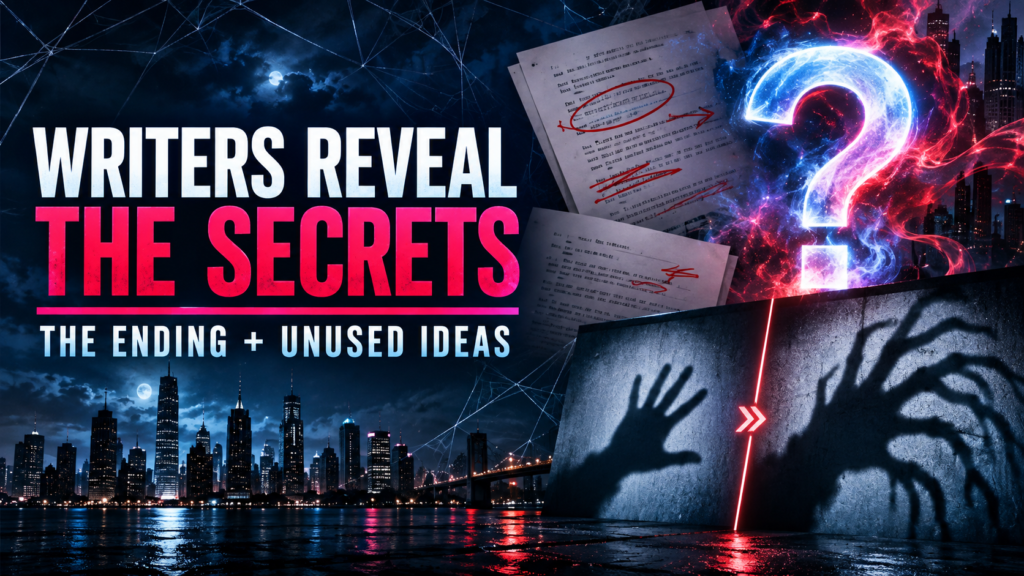
The screenwriters open up about the Jean Grey tease and the body-horror concepts that nearly transformed Peter Parker.
Warning: This article contains spoilers for Spider-Man: Brand New Day.
The ending of Spider-Man: Brand New Day left audiences with plenty to debate, and the writers behind the film say that uncertainty was intentional.
In exclusive video interviews shared by JustWatch, screenwriters Chris McKenna and Erik Sommers discussed two of the movie’s biggest talking points: its ambiguous conclusion involving Jean Grey and the more extreme transformation ideas considered for Spider-Man during development.
The Ending Was Designed to Keep Fans Guessing
The movie’s conclusion does not provide viewers with a simple answer about what comes next for Peter Parker or Jean Grey. Instead, McKenna and Sommers said they wanted to leave room for interpretation and allow fans to continue discussing what the final moments might mean.
That choice is especially important because Jean Grey’s role introduces a new layer of uncertainty to Peter’s world. The character’s appearance connects Spider-Man’s story to the mutant side of the Marvel universe while leaving unanswered questions about how that relationship could develop in future films.
The writers explain their approach to the ending and the Jean Grey tease in JustWatch’s first exclusive interview clip.
Rather than closing every storyline, the ending gives the audience clues without settling on one definitive interpretation. It is a creative decision that keeps the emotional consequences of the movie alive after the credits and leaves Marvel with several possible directions for Peter’s next chapter.
Spider-Man Nearly Took a Darker, More Monstrous Turn
McKenna and Sommers also revealed that the creative team considered taking Peter Parker’s physical transformation much further. Some early ideas leaned into science-fiction body horror and the monstrous “Man-Spider” concept familiar to longtime comic-book and animated-series fans.
That direction could have shown Peter developing frightening mutations as his powers changed, pushing the movie into darker visual territory. The writers explored how those physical changes might affect both the action and Peter’s state of mind before ultimately deciding how far the finished film should go.
In JustWatch’s second interview clip, the writers discuss how close the movie came to embracing Man-Spider and other unsettling transformation concepts.
The abandoned ideas offer an intriguing look at the filmmaking process. Even when a concept does not reach the screen, it can shape the tone of the story and help the creative team determine what best serves the character.
A New Stage for Tom Holland’s Spider-Man
Directed by Destin Daniel Cretton and written by McKenna and Sommers, Spider-Man: Brand New Day continues Peter Parker’s story after the life-altering events of Spider-Man: No Way Home. Tom Holland returns as Peter, with the movie placing the hero in a more isolated and emotionally complicated stage of his life.
McKenna and Sommers have been central to Holland’s Spider-Man era, having also worked on Spider-Man: Homecoming, Spider-Man: Far From Home and Spider-Man: No Way Home. Their latest comments show how carefully the filmmakers considered the balance between emotional storytelling, superhero spectacle and horror-inspired experimentation.
More exclusive interview clips are expected from JustWatch. Visit JustWatch for streaming information and follow Habari Entertainment for more entertainment news and analysis.



More Stories
Backrooms and Obsession Lead JustWatch Streaming Charts as East of Eden Tops TV
Obsidian Returns to Phoenix November 6–7 With Boys Noize, Chris Liebing and DJ Stingray 313
Backrooms and Lanterns Take No. 1 in JustWatch’s September Streaming Charts