




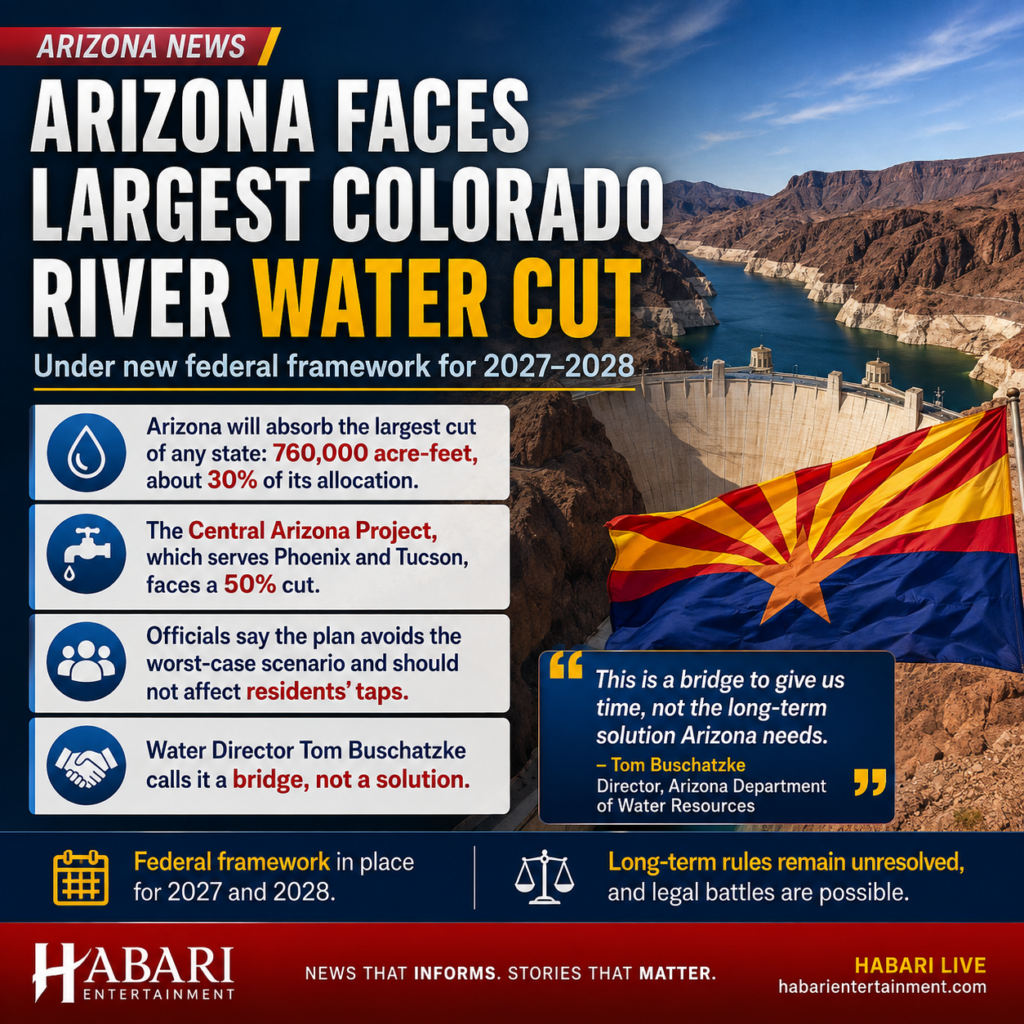
PHOENIX, Ariz. — Arizona is set to absorb the largest reduction in Colorado River water allocations of any state under a new federal operating framework covering 2027 and 2028.
Under the plan, Arizona is expected to lose approximately 760,000 acre-feet of Colorado River water, representing roughly 30% of the state’s allocation. The reduction comes after the seven Colorado River Basin states failed to reach an agreement on how to manage the river amid ongoing drought, declining reservoir levels and increasing demands on the water supply.
With negotiations stalled, federal officials stepped in to establish the operating framework for the next two years.
One of the largest impacts will be felt by the Central Arizona Project, the major water delivery system that supplies communities, farms and businesses throughout central and southern Arizona, including the Phoenix and Tucson areas. CAP is facing a 50% reduction in its Colorado River water supply under the framework.
Despite the size of the cuts, state water officials say residents should not expect their household taps to suddenly run dry.
Officials describe the framework as a way to avoid a potentially more severe outcome while giving Arizona and the other basin states additional time to negotiate a long-term agreement governing the Colorado River.
Arizona Department of Water Resources Director Tom Buschatzke and other state officials have characterized the plan as a bridge rather than a permanent solution.
The Colorado River supplies water to roughly 40 million people across the Southwest and supports extensive agricultural operations in Arizona, California and other Western states. Years of drought, climate pressures and declining reservoir levels have intensified disputes over how the river’s limited supplies should be divided.
The new framework is intended to provide stability in the short term, but significant questions remain about what happens after 2028.
Long-term operating rules for the river have yet to be finalized, and disagreements among the basin states could ultimately lead to additional negotiations or legal battles.
For Arizona, the coming years are likely to bring continued pressure to conserve water, develop alternative supplies and determine how the state manages its shrinking share of the Colorado River.
While officials say the new framework protects Arizona from a worst-case scenario for now, the state’s unusually large reduction underscores the growing challenges facing water users across the Southwest.



More Stories
ICC to Hold Reparations Hearing in Ali Kushayb Darfur Case on September 8
Three Students Stabbed at Americas High School in El Paso, Texas
Great Hearts Academy in Buckeye Evacuated Following Bomb Threat