

Habari Entertainment | October 2, 2026
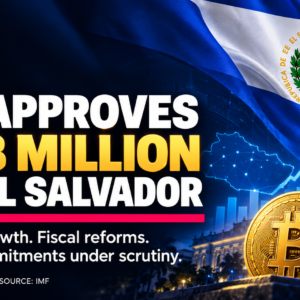
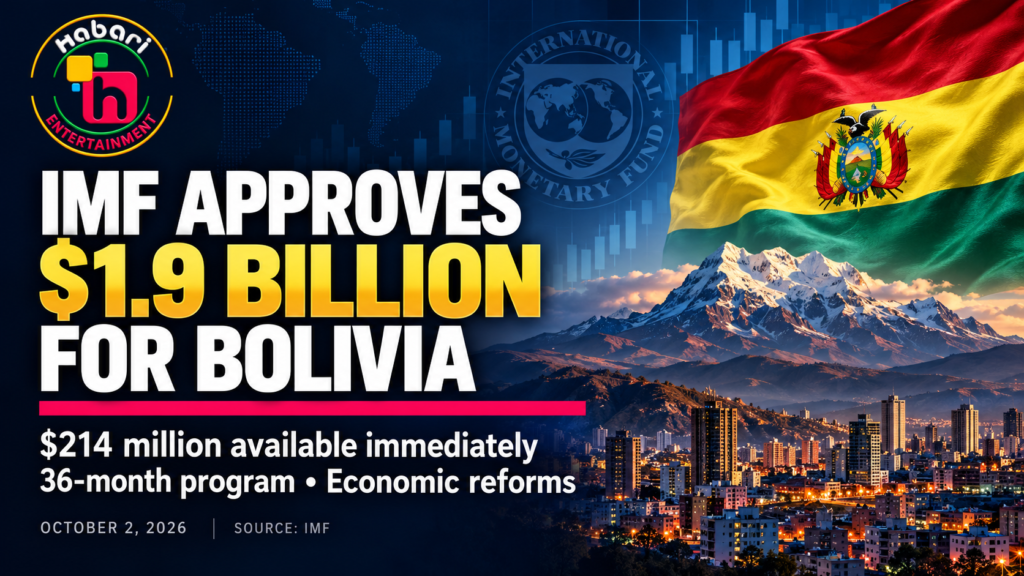
WASHINGTON, D.C. — The International Monetary Fund has approved a three-year financing arrangement worth approximately $1.9 billion for Bolivia, supporting a reform program aimed at stabilizing the economy, rebuilding international reserves, and protecting vulnerable households.
The Executive Board’s October 2 approval makes approximately $214 million available immediately. Remaining disbursements will be phased over the 36-month arrangement and depend on the completion of program reviews.
The agreement comes amid a difficult economic outlook. The accompanying IMF projections show real GDP contracting 3.0% in 2026 and another 1.5% in 2027, alongside high inflation and substantial public debt.
Financing could unlock additional support
The Extended Fund Facility arrangement provides access of SDR 1.369 billion, equivalent to 570% of Bolivia’s IMF quota. Its initial disbursement is SDR 156 million.
The IMF expects the program to help mobilize around $4 billion in additional financing from other international financial institutions. That represents anticipated support beyond the IMF arrangement, rather than funds approved for immediate disbursement.
The authorities’ program aims to reduce fiscal and external vulnerabilities, strengthen financial resilience, and create conditions for sustainable growth led by private investment.
Fuel subsidy reforms paired with social protection
Fiscal sustainability is a central element of the program. Planned measures include phasing out remaining fuel subsidies through an automatic pricing mechanism while strengthening and better targeting support for vulnerable households.
Other priorities include improving spending efficiency, addressing payment arrears, reforming public enterprises, and strengthening fiscal institutions. A medium-term fiscal framework will be anchored in debt reduction.
These measures place household protection alongside budget adjustment. Their implementation will be central to whether Bolivia can reduce fiscal pressures while limiting the burden on vulnerable families.
The accompanying economic indicators list a poverty rate of 37.7% for 2024.
Exchange rate and central bank changes
The program supports a transition toward a market-determined exchange rate and a monetary framework intended to promote external balance and price stability.
Following the Board discussion, IMF Deputy Managing Director Nigel Clarke identified the elimination of new central bank financing of the budget and the transition to reserve money targeting as important steps.
Additional priorities include prudent liquidity management, reserve accumulation, and foreign exchange intervention limited to addressing disorderly market conditions.
Reforms will also seek to strengthen central bank autonomy, governance, and accountability.
Projections show a difficult adjustment
The IMF projects narrower fiscal deficits and higher international reserves, even as the economy continues to contract.
| Indicator | 2025 projection | 2026 projection | 2027 projection |
|---|---|---|---|
| Real GDP growth | −1.6% | −3.0% | −1.5% |
| Average inflation | 19.5% | 12.7% | 15.8% |
| Year-end inflation | 20.4% | 14.2% | 10.7% |
| Overall public-sector balance, share of GDP | −11.4% | −9.2% | −6.7% |
| Gross nonfinancial public-sector debt, share of GDP | 83.3% | 100.2% | 95.1% |
| Gross international reserves | $3.713 billion | $5.734 billion | $7.297 billion |
Source: Projections accompanying the supplied IMF release. Referenced debt and reserve footnotes were not included in the supplied text.
The debt ratio is projected to exceed 100% of GDP in 2026 before declining in 2027. The overall fiscal deficit is forecast to narrow from 11.4% of GDP in 2025 to 6.7% in 2027.
The inflation figures require a distinction: average inflation is projected to rise in 2027, while year-end inflation is forecast to decline. The measures describe different periods and should not be treated interchangeably.
Financial oversight and investment reforms
The authorities’ agenda includes stronger financial supervision, improved crisis preparedness, and modernization of prudential standards.
The IMF also identified reforms to anti-money-laundering and counter-terrorism-financing frameworks as priorities.
Structural reforms will focus on governance, transparency, the business environment, and reducing market distortions to attract private investment and promote formal employment.
Clarke emphasized that sustained implementation, contingency planning, and multilateral support will be critical to success. He also called for clear communication of the program’s objectives to maintain public support.
The arrangement provides financing for Bolivia’s adjustment, but the projections point to continued economic strain before its longer-term growth objectives can be realized.
Source: IMF release dated October 2, 2026, and accompanying projections supplied for this article.




More Stories
Phoenix to Launch PHXLink With $2 On-Demand Rides in Three Service Zones
Woman Dies After Motorcycle Collision Near 59th Avenue and Baseline Road
St. Louis County Police Announce Eight Drug Take Back Locations for October 24