



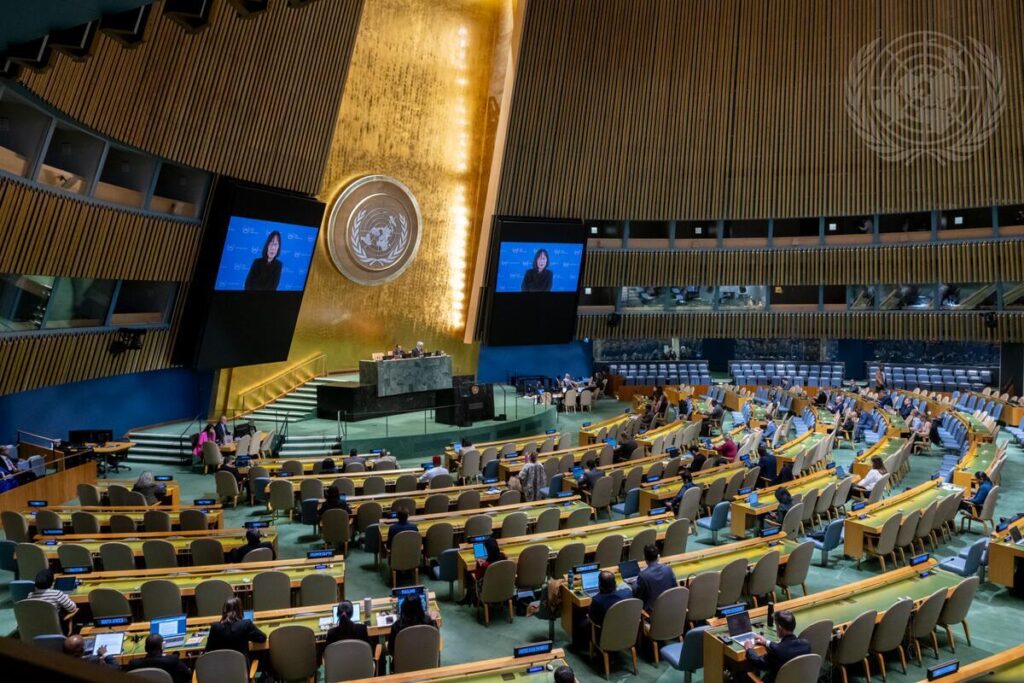
UNITED NATIONS — International Criminal Court President Judge Tomoko Akane reaffirmed the court’s commitment to independent judicial work as she presented its annual report to the United Nations General Assembly, highlighting victim participation, outstanding arrest warrants and the impact of sanctions.
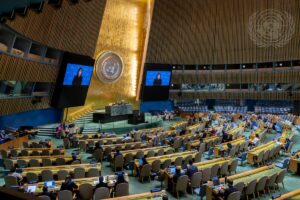
According to the court’s statement, Akane delivered her address by prerecorded video for the first time since the COVID-19 pandemic, following U.S. sanctions imposed against the institution on Oct. 9, 2026.
Akane said the court would continue to carry out its mandate with independence and impartiality, basing its decisions on law and evidence despite sanctions, threats and other pressures. International Criminal Court
More than 23,500 victims participated in proceedings
Akane reported that judicial work advanced across investigations, arrest warrants, confirmation of charges, trials, appeals and reparations.
More than 23,500 victims participated in proceedings during the reporting period, including more than 7,000 involved at the reparations stage, according to the statement.
The figures underscored the role of victims in the court’s work, which extends beyond determining criminal responsibility to proceedings addressing harm suffered by affected communities.
Thirty-four public arrest warrants remain outstanding
Akane identified cooperation from member states as essential to enforcing the court’s decisions. She said 34 publicly known arrest warrants remained outstanding.
Under Part 9 of the Rome Statute, countries that belong to the court’s treaty system have legal obligations to cooperate. Akane emphasized that arresting and surrendering suspects is central to those obligations.
Outstanding warrants leave cases dependent on whether authorities can apprehend suspects and transfer them to the court. Rome Statute
Membership and international support remain priorities
Akane welcomed Hungary’s decision to revoke its notification of withdrawal from the Rome Statute. She also reported that six states had submitted withdrawal notifications during the reporting period.
The statement did not identify those six countries or specify when their withdrawals would take effect.
Akane said broader participation in the treaty system remains essential to strengthening the court’s legitimacy.
She also credited the United Nations with supporting the institution under its 2004 Relationship Agreement. UN entities directly supported 61 court missions, according to her address.
Appeal for continued protection of the court’s mandate
Akane concluded by urging governments and the wider international community to support the institution established to pursue accountability for the world’s gravest crimes.
Her appeal linked the court’s ability to fulfill its mandate with practical cooperation, continued international backing, and protection of its judicial independence.


More Stories
ICC confirms jurisdiction in Libya case against Osama Elmasry Njeem
IMF signs agreement with Spain for technology center in Valencia
Phoenix Police Shoot Armed Suspect Near 79th Avenue