





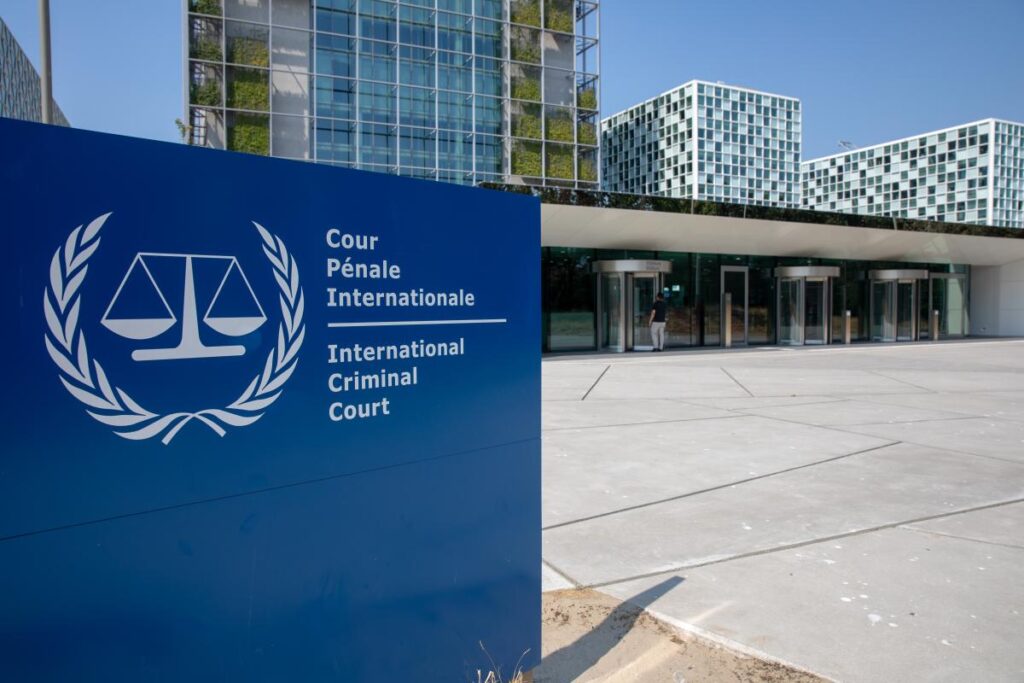
The Italian politician and human-rights advocate helped build support for the tribunals that preceded the International Criminal Court and played a decisive role in establishing the ICC.
The International Criminal Court is honoring Emma Bonino, the influential Italian politician and human-rights advocate whose decades of activism helped shape the modern international justice system.
Bonino died on September 11, 2026, at age 78. Over a public career spanning more than 50 years, she served as Italy’s foreign minister and a European commissioner while leading campaigns for women’s rights, civil liberties, and international accountability. The Guardian reported that she was also a prominent advocate in the campaigns that led to the legalization of abortion and divorce in Italy.
In a statement released September 16, the ICC credited Bonino’s unwavering commitment to the rule of law with helping advance international criminal justice.
“The International Criminal Court and the cause of international criminal justice owe much to her relentless commitment to the rule of law as a condition for the peaceful coexistence of all peoples,” the Court said.
A Career Built Around Human Rights
Bonino spent more than half a century defending civil and political rights, including the rights of women and girls around the world.
The ICC described her as a leader who chose action over rhetoric and possessed a rare ability to unite people across political divisions and national borders. Her work inspired generations of advocates, politicians, diplomats, and attorneys.
Bonino’s international advocacy included support for the United Nations tribunals established to prosecute serious crimes committed in the former Yugoslavia and Rwanda. Those tribunals helped build the legal and political foundation for a permanent international court capable of prosecuting genocide, crimes against humanity, and war crimes.
She later became one of the most influential advocates for the establishment of the ICC itself.
A Decisive Voice at the Rome Conference
Bonino participated in the 1998 Rome Conference as the European Union’s commissioner for humanitarian affairs. The conference produced the Rome Statute, the founding treaty of the International Criminal Court.
Calling on governments to support the creation of the Court, Bonino argued that the international community had an obligation to confront impunity.
“The time has come to break the cycle of violence, to put an end to impunity and to demonstrate the international community’s resolve to assert the primacy of the rule of law,” Bonino said at the conference.
The ICC said her determination was decisive in securing the adoption of the Rome Statute and transforming the goal of accountability for the world’s most serious crimes into a permanent institution.
The treaty was adopted on July 17, 1998, and the International Criminal Court began operating in 2002.
Bonino Continued Defending the Court
Bonino’s support for the ICC continued long after its creation.
Fifteen years after the Rome Conference, she returned to the issue while serving as Italy’s foreign minister. She called for continued cooperation among governments and warned against weakening the Court or the principles behind it.
The ICC’s establishment and its guiding principles, Bonino said, were “a historic achievement for the international community that must not be called into question.”
Her message reflected a consistent belief that international justice depends not only on institutions but also on the willingness of countries to support investigations, honor legal obligations, and cooperate across borders.
A Legacy of Action
Bonino’s career extended far beyond international criminal law. She was known for challenging political and religious institutions over abortion rights, divorce, migration, hunger, female genital mutilation, and other humanitarian issues.
Although her campaigns frequently generated opposition, she remained a prominent voice for European cooperation, individual liberty, and human dignity.
“Emma Bonino’s intelligence and dedication will be missed,” the ICC said. “Her energy and commitment will continue to resound in the years to come in the actions of all those who consider human dignity as a founding principle of human civilisation.”
Her legacy remains embedded in the Court she helped establish and in the international movement seeking accountability for genocide, crimes against humanity, and war crimes.



More Stories
ICC Assembly Bureau Calls for Immediate Revocation of Sanctions Against Court
Man Dies After Hit-and-Run Collision on Northern Avenue in Phoenix
Phoenix Police Arrest Two in Burglary of Former MLB Player’s Storage Locker