



By Habari Entertainment | November 8, 2026
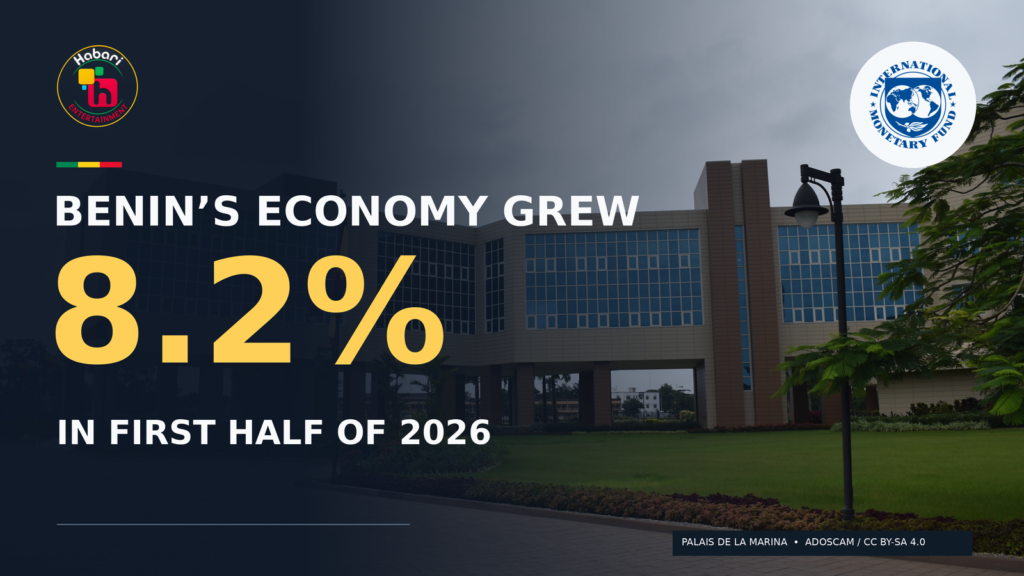
COTONOU, Benin — Benin’s economy grew 8.2% from a year earlier in the first half of 2026, driven by manufacturing, construction and trade, according to preliminary findings from International Monetary Fund staff. The team projects growth of 7.8% for all of 2026 and about 7% in 2027 as higher transport and import costs filter through the economy.
The findings follow an Oct. 27–Nov. 6 visit to Cotonou led by Sonali Das for Benin’s 2026 Article IV consultation, a review of the country’s economy and policies. Staff will prepare a report for the IMF Executive Board to consider, subject to IMF management approval.
Higher transport and import costs could slow growth
Benin recorded 8.1% real GDP growth in 2025, its fastest pace in nearly two decades, according to IMF staff. Inflation remained low, and the team expects it to reach the 2% target in 2027.
Staff said processing more agricultural commodities within Benin could support growth over the next several years. Stronger performance in special economic zones and closer regional cooperation could also help attract investment, expand exports and create jobs. The team identified volatile commodity prices, tighter global financing, growing trade barriers, deteriorating regional security and extreme weather as risks.
IMF staff urges Benin to protect social spending
Strong revenue collection helped narrow Benin’s estimated fiscal deficit from 2.5% of GDP in 2024 to 2.3% in 2025. Staff expects the deficit to stay at 2.3% in 2026 before rising to 2.9% in 2027, just below the West African Economic and Monetary Union’s 3% ceiling.
The team recommended broadening the tax base, reviewing tax exemptions and improving compliance to free up funds for development priorities. It also called for protecting priority social spending and updating Benin’s Single Social Registry so assistance reaches households most in need.
Debt transparency and small-business financing
IMF staff welcomed Benin’s changes to its public debt management rules and the publication of revised debt figures aligned with international standards. The team called for closer oversight of state-owned enterprises, better reporting on risks to public finances and stronger procurement practices.
Staff described the financial system as broadly sound and said credit to the private sector continued to expand. Wider use of digital payments, better credit registries and clearer rules for using assets as collateral could make it easier for small and medium-sized businesses to borrow. The mission also highlighted plans to help businesses enter the formal economy, invest in workforce skills and improve agricultural productivity.
More on Benin from the IMF · More world news from Habari Entertainment



More Stories
Phoenix and St. Mary’s Food Bank Launch Citywide Holiday Food Drive
ICC President Tomoko Akane Discusses Support for Court During Canada Visit
RS-IP Exits Miss Polo Universe Franchise, Ricardo Santiago Soto Leaves U.S. Director Role