


The IMF warns that poorly targeted subsidies can drain public budgets while failing to protect the households most at risk.
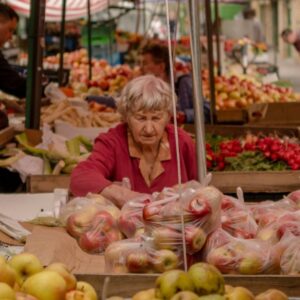
As rising energy costs, conflict, and extreme weather threaten another wave of food-price increases, governments face a critical decision: Should they subsidize prices, provide food vouchers, or distribute food directly?
The wrong choice can waste limited public funds while leaving vulnerable families without the assistance they need, according to a new International Monetary Fund analysis.
For millions of low-income households, the stakes are particularly high. Food purchases can consume more than half of a family’s total spending in some countries, meaning even a modest price increase can force people to reduce the quantity or nutritional quality of what they eat.
The IMF says governments should diagnose the specific cause of a food crisis before selecting a relief program. Food subsidies, vouchers, and direct distribution can each be effective—but only under the right circumstances.
New Threats to Global Food Security
A potentially powerful El Niño weather pattern has renewed concerns about drought, flooding, and disrupted harvests in vulnerable agricultural regions.
At the same time, the war in the Middle East could disrupt fertilizer and energy supplies, raising production and transportation costs for farmers. Prices for some fertilizers increased by nearly 50% after the conflict escalated earlier in 2026, according to the IMF.
Although fertilizer prices have since eased, the spike occurred during the planting season in many countries. Farmers who paid more for fertilizer and other supplies may still face lower income or pass those costs along through higher food prices during the current harvest.
Recent crises illustrate how quickly these shocks can spread. The 2015–16 El Niño affected the food security of approximately 60 million people worldwide. In 2022, food-price increases associated with Russia’s war in Ukraine pushed an estimated 71 million people into poverty in only three months.
For the most vulnerable countries, the IMF argues, the question is not whether another food shock will happen but when.
Four Questions Governments Should Ask
A new IMF policy framework recommends that governments answer four basic questions before launching a food-assistance program:
- Is enough food available?
- Is affordability the main problem?
- Are markets and distribution networks functioning?
- Can assistance be targeted to the people who need it most?
Together, those questions help determine whether a government should intervene through subsidies, vouchers, cash-like assistance or direct food distribution.
During an emergency, political pressure often pushes leaders to act immediately. Speed may be necessary, but rushing without identifying the underlying problem can produce expensive programs that remain in place long after the crisis ends.
Price Subsidies Are Fast but Costly
Price subsidies are often the first policy governments adopt when food costs rise.
They can be introduced quickly and do not require officials to identify every eligible household. By lowering prices for everyone, subsidies can provide immediate and visible relief.
But that broad reach is also their greatest weakness.
Wealthier households often receive a large share of the benefit because they generally buy more food and have greater purchasing power. Governments may therefore spend substantial amounts supporting families that could afford higher prices while providing too little assistance to those facing hunger.
Subsidies can also distort market signals and discourage conservation or changes in consumption. When governments artificially suppress prices, consumers may not see the true cost of a shortage.
The IMF recommends avoiding generalized price subsidies whenever possible. If governments use them during an emergency, they should be temporary, transparent, and narrowly limited.
Vouchers Work When Food Is Available
Food vouchers are generally more efficient when stores have adequate supplies, but low-income households cannot afford them.
Governments can direct vouchers toward vulnerable families by using social registries, income data, and digital payment systems. This approach allows a country to spend less than it would on a universal subsidy while delivering more meaningful assistance to those most in need.
However, vouchers require administrative capacity. Governments must be able to identify eligible households, prevent fraud, process payments, and ensure that retailers accept the assistance.
In countries without reliable social registries or digital infrastructure, creating a voucher program during a rapidly developing crisis may take too long.
Vouchers also cannot solve a physical food shortage. Giving families additional purchasing power will have little effect if stores and markets have nothing to sell.
Direct Food Distribution Can Save Lives
When crops fail, supply chains collapse, or conflict prevents food from reaching local markets, governments may need to distribute food directly.
In-kind assistance can be essential when food is physically unavailable. It can help prevent hunger during wars, natural disasters, and other emergencies that disrupt production or transportation.
The 2015–16 El Niño demonstrated the danger of such disruptions. Drought and saltwater intrusion severely damaged rice production in Vietnam, with some farmers losing 90% of their harvests. Lower maize harvests affected approximately 40 million people in Southern Africa, while flooding caused agricultural losses in countries including Ecuador and Somalia.
Direct distribution can save lives in those circumstances, but it is expensive to operate. Governments must purchase, transport, store, and deliver large quantities of food, sometimes in areas where infrastructure has been damaged.
If continued unnecessarily, free food distribution can also reduce demand for locally grown products. That can drive down prices received by farmers and weaken incentives to rebuild domestic production.
Emergency Programs Need an Exit Strategy
Poorly designed food-assistance programs can consume money that governments need for agricultural research, roads, irrigation, healthcare, and education.
The fiscal risk is especially significant in low-income countries, where generalized food subsidies already consume a substantial share of public resources and become more expensive during global price spikes.
Temporary programs can also become politically difficult to remove once the public begins viewing them as permanent benefits.
The IMF recommends establishing an exit strategy at the beginning of any emergency response. As conditions stabilize, governments should gradually move from broad crisis measures toward targeted assistance supported by stronger administrative systems.
Preparation Can Lower the Cost of the Next Crisis
No single food-assistance program will work in every country or every emergency.
Subsidies may provide the fastest relief when governments cannot identify vulnerable households. Vouchers may be more effective when food is available but unaffordable. Direct distribution may become necessary when markets and supply chains stop functioning.
The best time to decide among those options is before prices surge.
Governments can prepare by strengthening social registries, developing digital payment systems, evaluating distribution networks, and identifying households most likely to need help. They can also establish clear rules for activating and ending emergency programs.
By diagnosing whether a crisis involves availability, affordability, market failure, or limited administrative capacity, policymakers can protect more people while using fewer public resources.




More Stories
ICC to Deliver Judgment in Mahamat Said War Crimes Case on September 23
ICC Honors Emma Bonino, Champion of International Justice, After Her Death at 78
ICC Calls for Greater Asia-Pacific Representation at Eighth Hague Forum