



The season is over for the Phoenix Suns, and for the first time in a long time, there’s a strange feeling surrounding the franchise: disappointment mixed with optimism.
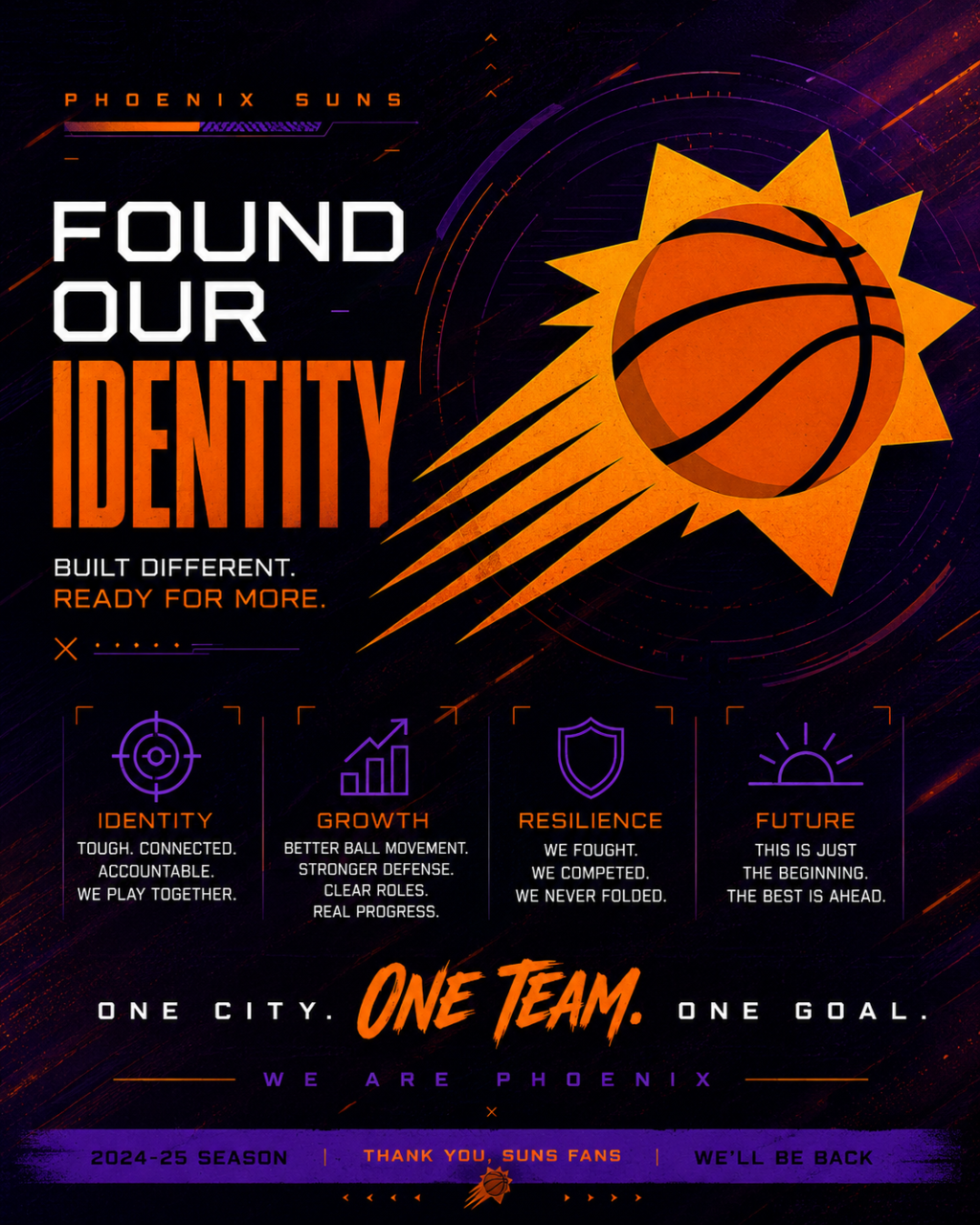
That may sound contradictory for a team with championship expectations, but this year felt different. The Suns didn’t just rely on star power or try to outscore everybody every night. They actually developed something that’s been missing in Phoenix for years — an identity.
There was toughness. There was chemistry. There was accountability. Most importantly, there were stretches where the Suns genuinely looked like a complete basketball team instead of a collection of talented names trying to coexist.
And honestly? That matters more than people realize.
For a franchise that has spent recent seasons searching for consistency, this team finally looked connected.
The Growth Was Real
Throughout the season, Phoenix showed growth in areas that don’t always appear in the box score.
The ball movement improved. Defensive communication improved. Players understood their roles better. The team competed harder on loose balls and fought through adversity instead of folding when games got ugly.
Even when the Suns lost, they looked more organized and mentally tougher than they had in previous years.
That’s a major step forward.
There were moments this season where Phoenix looked capable of beating anybody in the league. The offense wasn’t just isolation basketball anymore. The rotations tightened up. Younger players gained confidence. Veterans bought into doing the dirty work.
That’s how real contenders are built.
Not overnight. Through identity.
Devin Booker Had an Odd Season
There’s no way to discuss the Suns’ season honestly without talking about Devin Booker.
Booker is still the face of the franchise. Still one of the most skilled guards in basketball. Still beloved in Phoenix.
But something felt different offensively this season.
The explosiveness didn’t always look the same. There were games where he struggled to create separation consistently. The mid-range game was still there in flashes, but defenses seemed more comfortable crowding him physically.
It wasn’t a bad season by any means.
But for Suns fans who have watched Booker closely for years, there were stretches where he looked a half-step slower offensively than the elite scorer people are used to seeing.
Maybe it was fatigue. Maybe it was wear and tear from years of carrying heavy offensive responsibility. Maybe defenses simply adjusted. Or maybe this was one of those seasons where rhythm never fully settled in.
Whatever the reason, it became noticeable.
And that doesn’t mean Booker is washed or declining dramatically. Far from it.
Great players evolve.
But Phoenix may need to continue building a system where Booker doesn’t have to carry the entire offensive burden every single night.
The OKC Series Left a Bitter Taste
The playoff loss to the Oklahoma City Thunder is going to sting Suns fans for a while.
Not just because Phoenix lost.
Because of how frustrating the officiating felt throughout the series.
Around the league, more fans, analysts, and even coaches have started openly discussing the way OKC plays — especially regarding foul calls and physicality.
The Thunder are undeniably talented. Shai Gilgeous-Alexander is an MVP-level player. Their defense is aggressive, physical, and relentless.
But the criticism keeps coming from the same place:
OKC plays extremely physical on one end, yet often gets rewarded with whistles the second there’s contact going the other direction.
That inconsistency has become one of the biggest talking points in basketball.
Fans across social media have flooded timelines with clips, memes, and side-by-side comparisons questioning how certain fouls are being called. Even opposing coaches throughout the season subtly referenced the officiating imbalance when discussing games against OKC.
And Phoenix fans especially felt it during this series.
There were possessions where the Suns struggled to get calls despite heavy contact at the rim, while touch fouls seemed to go the other way almost instantly.
Whether fair or not, perception matters.
Right now, the perception problem for the NBA is growing.
The Flopping Problem Is Becoming Impossible to Ignore
The league has a bigger issue than just one playoff series.
Basketball fans are getting exhausted with the constant foul baiting, exaggerated reactions, and theatrical flopping that dominate major playoff moments.
Watching players snap their heads back after minimal contact or collapse to the floor on routine plays has become one of the most criticized parts of today’s NBA.
And the frustration isn’t only directed at OKC.
Even legends like LeBron James continue to receive criticism from fans online for selling contact dramatically during playoff games.
The problem is consistency.
If the league allows physical defense, let players play physically.
If touch fouls are going to be called tightly, call them evenly for everyone.
But what frustrates fans most is watching one team play aggressively while simultaneously benefiting from whistle-heavy officiating whenever slight contact occurs against them.
That’s where accusations of “flopping culture” grow.
Former players, coaches, podcasts, and fans all seem to be discussing the same thing right now: the NBA has to find a better balance between protecting players and preserving competitive integrity.
Because when officiating becomes the main storyline instead of basketball itself, the product suffers.
The Future Still Feels Hopeful
Despite the frustrating playoff exit, the Suns finally feel like a team moving in the right direction.
That may not satisfy fans who want banners immediately, but it’s important.
Phoenix rediscovered grit this season.
They developed chemistry.
They created structure.
And even with lingering questions about Booker’s offensive consistency and the frustrations surrounding officiating, there’s still a belief that this core can compete.
The next step is turning identity into sustained postseason success.
Because for the first time in a while, the Suns don’t just look talented.
They actually look like a team.




More Stories
2026 Biletnikoff Award Preseason Watch List Spotlights College Football’s Top Receivers
GILLIN NAMED TO COLLEGE FOOTBALL PLAYOFF SELECTION COMMITTEE
Outland Trophy celebrates 81st season, unveils preseason watch list