



The Presidency of the Assembly of States Parties has welcomed the Government of Hungary’s decision to discontinue the process of withdrawing from the Rome Statute and remain a State Party to the treaty that established the International Criminal Court (ICC).
In a statement released by the Presidency, officials praised Hungary’s move as an important step toward maintaining international accountability and strengthening the global legal framework designed to prosecute the world’s gravest crimes, including genocide, war crimes, and crimes against humanity.
“The Presidency further congratulates the Government of Hungary for this important decision,” the statement said, emphasizing that Hungary’s continued participation supports “our shared objective of ensuring accountability for the gravest crimes, strengthening the international legal order, and supporting multilateral institutions.”
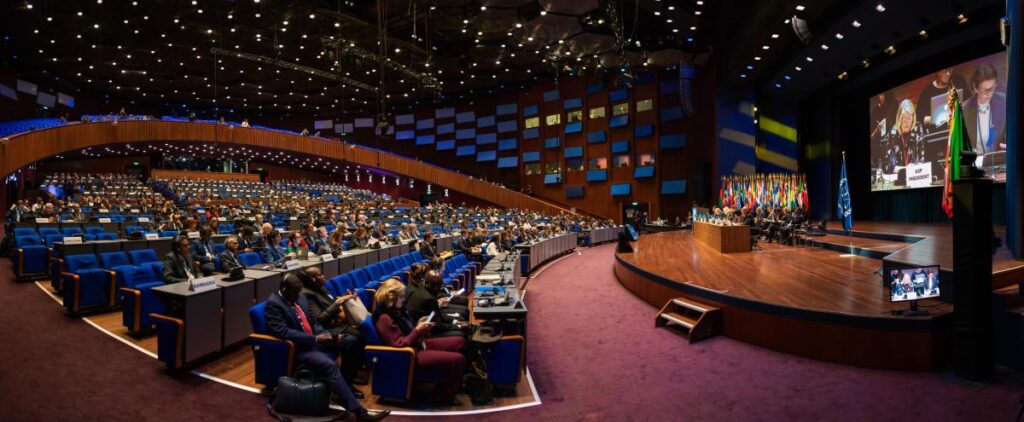
The Rome Statute, adopted in 1998, serves as the founding treaty of the ICC, which is headquartered in The Hague, Netherlands. Countries that ratify the statute become members of the Assembly of States Parties, the ICC’s management, oversight, and legislative body.
The Assembly of States Parties is made up of representatives from nations that have ratified or acceded to the Rome Statute. The body plays a critical role in overseeing the court’s administration, budget, and policy direction.
Currently, the Presidency of the Assembly is led by H.E. Ms. Päivi Kaukoranta of Finland, alongside Vice-Presidents H.E. Mr. Michael Kanu of Sierra Leone and H.E. Ms. Margareta Kassangana of Poland.
Hungary’s announcement comes at a time when international institutions and multilateral organizations continue to face political pressure and scrutiny in several regions around the world. Supporters of the ICC argue that maintaining strong participation among member states is vital to preserving global accountability mechanisms and ensuring justice for victims of mass atrocities.
The decision by Hungary to remain within the Rome Statute framework is being viewed by many observers as a reaffirmation of support for international cooperation and the rule of law.



More Stories
Phoenix Police Investigate Double Homicide Near 16th Street and McKinley Street
IMF: Tax Avoidance Crackdowns Are Reshaping Competition for Global Business
ICC Unseals Four Taliban Arrest Warrants Over Alleged Gender Persecution in Afghanistan