



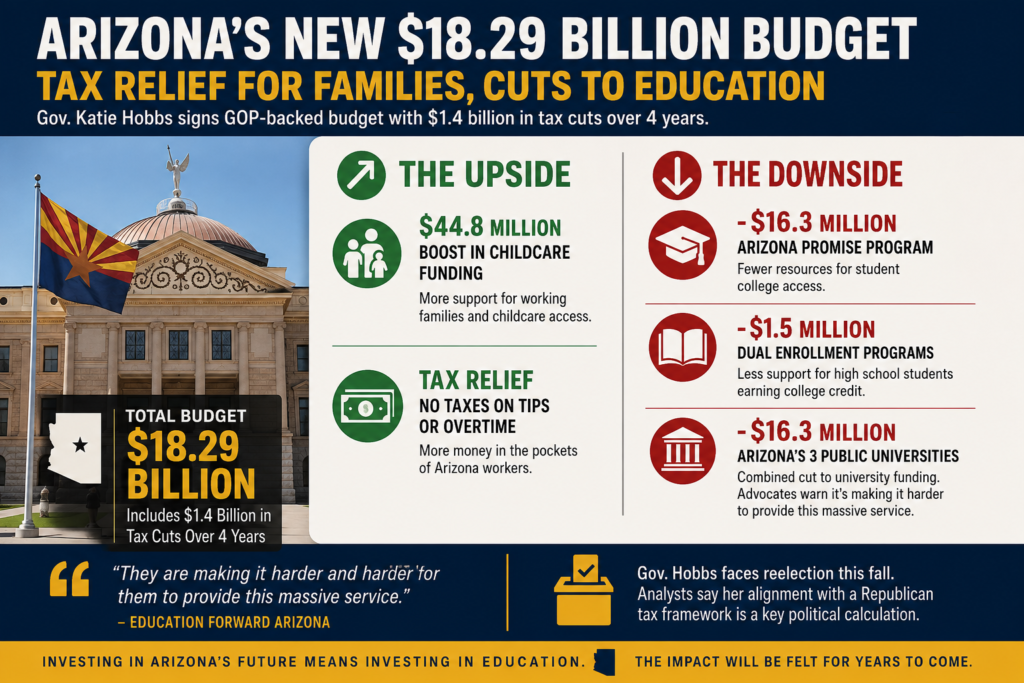
PHOENIX, Ariz. — Arizona lawmakers have approved and Gov. Katie Hobbs has signed a new $18.29 billion state budget that includes approximately $1.4 billion in tax cuts over the next four years. While state leaders are promoting the package as a financial win for working families, education advocates are raising concerns about the impact of deep cuts to higher education and workforce development programs.
Gov. Hobbs, a Democrat, praised the bipartisan budget agreement, highlighting provisions that increase support for childcare and eliminate state taxes on tips and overtime pay. Supporters argue these measures will provide meaningful financial relief for Arizona workers and help families cope with rising costs.
However, the budget also includes several reductions affecting Arizona’s education system.
Among the programs facing cuts is the Arizona Promise Program, which provides financial assistance to students pursuing higher education. The program will see a reduction of $16.3 million. Additionally, funding for dual enrollment programs, which allow high school students to earn college credits while still in school, was reduced by $1.5 million.
Arizona’s three public universities will also absorb a combined $16.3 million funding reduction under the new spending plan.
Education advocates warn that these cuts could have long-term consequences for students and the state’s workforce pipeline.
Education Forward Arizona criticized the reductions, arguing that universities play a critical role in preparing Arizona’s future workforce and supporting economic growth.
“They are making it harder and harder for them to provide this massive service,” the organization said regarding the cuts to public higher education institutions.
Despite concerns from education groups, the budget does provide increased investment in childcare services. Lawmakers approved an additional $44.8 million in childcare funding, a move supporters say will help working parents remain in the workforce and access affordable care options.
The budget’s tax relief provisions, including the elimination of taxes on tips and overtime earnings, have also been welcomed by many workers and business advocates who argue the changes will put more money back into the pockets of Arizonans.
The political implications of the budget are also drawing attention. Gov. Hobbs, who faces voters in her reelection campaign this fall, has embraced a spending plan built around a Republican-backed tax framework. Political analysts note that the governor’s support for the package reflects a balancing act between fiscal compromise and policy priorities as Arizona heads into a highly competitive election season.
As implementation of the budget begins, debate is expected to continue over whether the immediate tax relief outweighs concerns about reduced investments in education and workforce development programs.
For many Arizona families, students, and educators, the long-term effects of those decisions may not become clear for years to come.




More Stories
Phoenix Police Investigate Double Homicide Near 16th Street and McKinley Street
IMF: Tax Avoidance Crackdowns Are Reshaping Competition for Global Business
ICC Unseals Four Taliban Arrest Warrants Over Alleged Gender Persecution in Afghanistan