



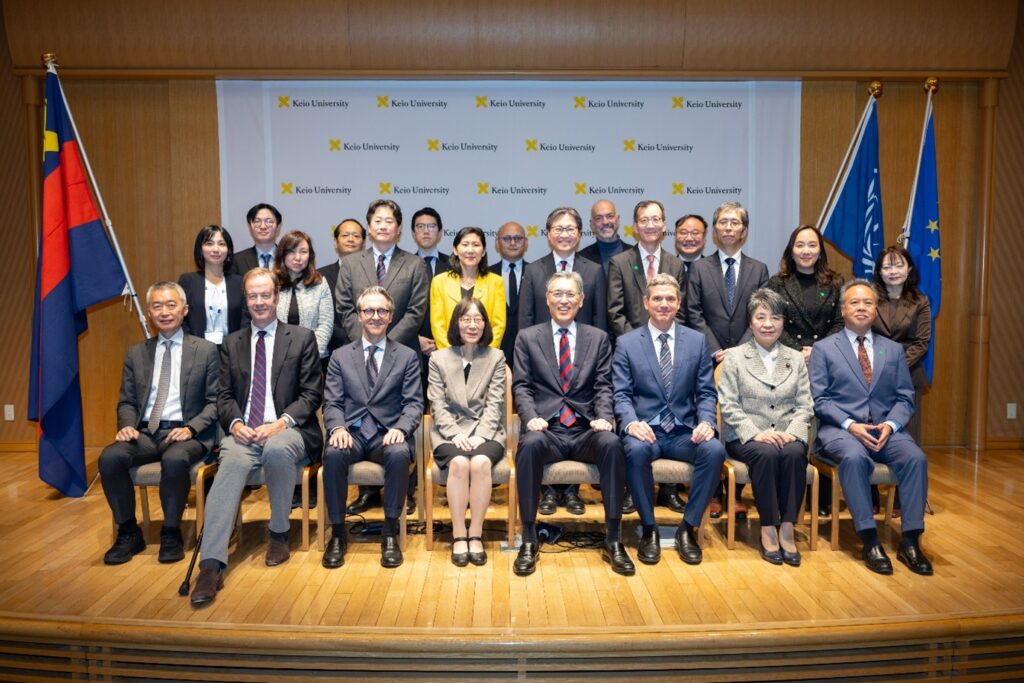
The two-day Tokyo forum brought together universities from across the region to discuss academic cooperation, the ICC’s work and priorities for 2027.
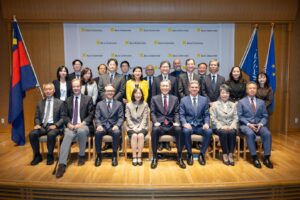
TOKYO, Japan — Keio University and the International Criminal Court (ICC) held the Second Forum of the Asia-Pacific Academic Network for International Criminal Justice on November 26 and 27 at Keio’s Mita Campus.
The forum’s theme, “Challenges for International Criminal Justice in Asia and Beyond,” brought together representatives from Asia-Pacific universities that have formal partnerships with the ICC. Discussions explored future academic cooperation, engagement with the Court and ways to strengthen regional collaboration on international justice.
The public opening session included remarks from Keio University President Kohei Itoh; Gentaro Kamei, dean of Keio’s Faculty of Law; European Union Ambassador-designate to Japan Giorgio Aliberti; Dutch Ambassador to Japan Gilles Beschoor Plug; and Yoko Kamikawa, a member of Japan’s House of Representatives and former foreign and justice minister.
In her keynote lecture, ICC President Judge Tomoko Akane spoke about the Rome Statute and the shared responsibility to support international justice.
“The Rome Statute speaks of the responsibility we bear towards future generations,” Akane said. “That responsibility belongs not only to the States that negotiated it, nor to the people who work at the Court. It belongs to all of us.”
She added that the future of international justice is something people must “collectively choose to build with our own hands.”
Itoh emphasized the role universities can play as independent spaces for inquiry. “At a time when international justice and its institutions face serious challenges, the role of universities as places of independent, open inquiry is more important than ever,” he said.
The program also featured lectures by former ICC judges Raul Cano Pangalangan and Chang-ho Chung. Their topics addressed the case of former Philippine President Rodrigo Duterte before the ICC and legal questions involving states that are not parties to the Rome Statute.
Participants discussed the network’s first year, its strategic priorities for 2027, the development of national working groups and plans for its long-term sustainability.
The forum is part of the ICC’s broader Asia-Pacific Engagement Strategy, which aims to strengthen the Court’s relationships in the region through academic cooperation, capacity building and outreach. Of the 55 states in the Asia-Pacific region, 19 are parties to the Rome Statute, giving the region the lowest level of representation among the world’s regions, according to the ICC.
The organizers said the event highlighted the potential for cooperation between universities and the Court, and could serve as a model for engagement in other regions.
The ICC and Keio University thanked the European Union for its financial support and recognized the participating universities, professors, and other contributors for their involvement.


More Stories
ICC President Tomoko Akane Meets Japan’s Prime Minister and Senior Officials in Tokyo
LAPD Investigates Officer-Involved Shooting During Newton Division Robbery Response
Free Choose Chandler Holiday Pass Rewards Shopping and Dining Locally