



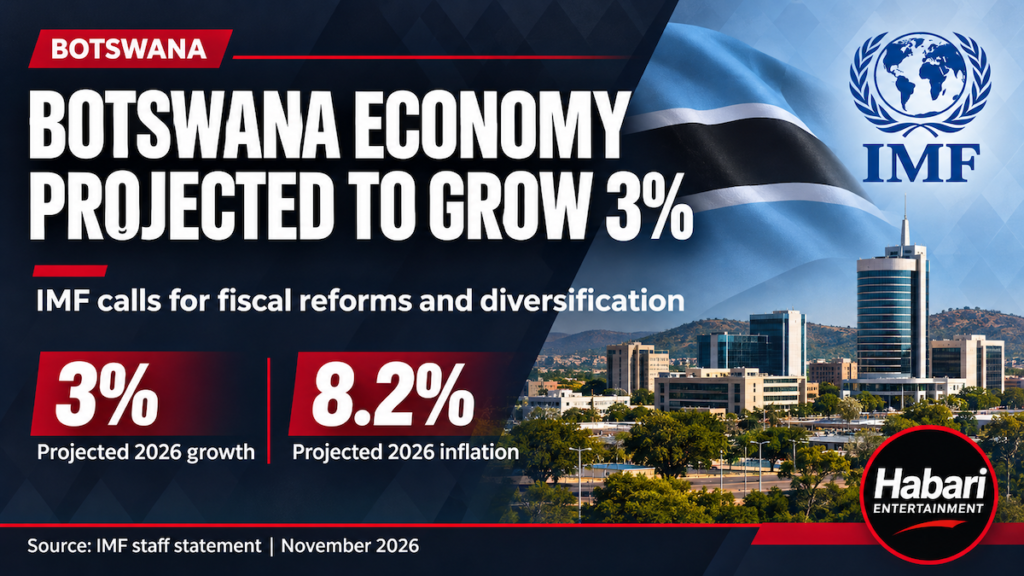
GABORONE, Botswana — Botswana’s economy is expected to grow 3 percent in 2026 following two years of contraction, according to an International Monetary Fund staff team. However, weak natural diamond demand, elevated inflation and rising public debt continue to weigh on the country’s outlook.
The assessment follows discussions in Gaborone from November 9–23 for Botswana’s 2026 Article IV consultation. The IMF team, led by Faisal Ahmed, called for spending reforms, stronger fiscal safeguards and economic diversification to support employment.
Diamond Dependence Weighs on Recovery
Economic activity rebounded in early 2026, supported by mining. But the IMF team said subdued demand for natural diamonds and growing competition from lab-grown alternatives continue to challenge Botswana’s recovery.
Growth outside the mineral sector is expected to recover only gradually without sustained reforms. Unemployment remains high, particularly among young people.
“Botswana’s prolonged slowdown underscores the need for a new growth model driven by non-mineral, private-sector-led activity,” Ahmed said.
The team said ambitious reforms could gradually lift medium-term growth above 4 percent while strengthening fiscal and external sustainability.
Inflation Remains Elevated
Inflation is projected at 8.2 percent in 2026. Annual inflation stood at 7.6 percent in October, largely reflecting higher fuel prices, according to the statement.
The Bank of Botswana increased its policy rate to 5.5 percent in April. IMF staff said further tightening may be necessary if price pressures persist, alongside stronger liquidity operations and clearer policy communication.
Rising Debt Prompts Call for Spending Changes
Botswana’s fiscal deficit narrowed to an estimated 6.3 percent of gross domestic product in fiscal year 2025/26, supported by stronger mineral revenue and lower capital spending.
Nevertheless, the public wage bill continued to rise. Public debt reached approximately 34 percent of GDP, compared with 22.5 percent two years earlier.
The IMF team recommended containing wage costs, better targeting subsidies and social programs, and improving public investment management. It also called for broader tax coverage and stronger tax administration.
A medium-term debt anchor, an expenditure rule and an adequate liquid-asset buffer could help rebuild financial reserves and safeguard debt sustainability, staff said.
External Pressures Continue
Botswana’s current account is projected to shift into a deficit of 0.2 percent of GDP in 2026, reflecting lower net diamond exports and substantially higher fuel imports.
Financial inflows are nevertheless expected to support reserve accumulation. International reserves are projected to remain above five months of import cover at the end of 2026.
IMF staff said any transition toward greater exchange-rate flexibility should proceed gradually, with careful coordination across fiscal and monetary policies and clear public communication.
Diversification and Jobs Remain Priorities
The team identified access to finance, land administration, electricity supply, competition, governance and trade openness as priorities for reform. It also recommended reducing the footprint of state-owned enterprises and improving education, health outcomes and workforce skills.
Botswana’s financial sector remains resilient, with banks well capitalized and profitable, according to the assessment. Stronger supervision, liquidity standards, stress testing and crisis preparedness would help preserve that resilience.
The findings represent the visiting IMF staff team’s assessment following its consultation discussions.
Source: IMF staff statement supplied for this article.



More Stories
ICC Unveils Bust of Rafał Lemkin Honoring His Contribution to Genocide Law
77-Year-Old Man Killed in Pedestrian Crash on Phoenix’s 87th Avenue
Driver Booked on Murder Counts After Phoenix Crash Kills Two Men