


Trump’s 2025: A Year of Executive Power, Cultural Warfare, and National Turmoil
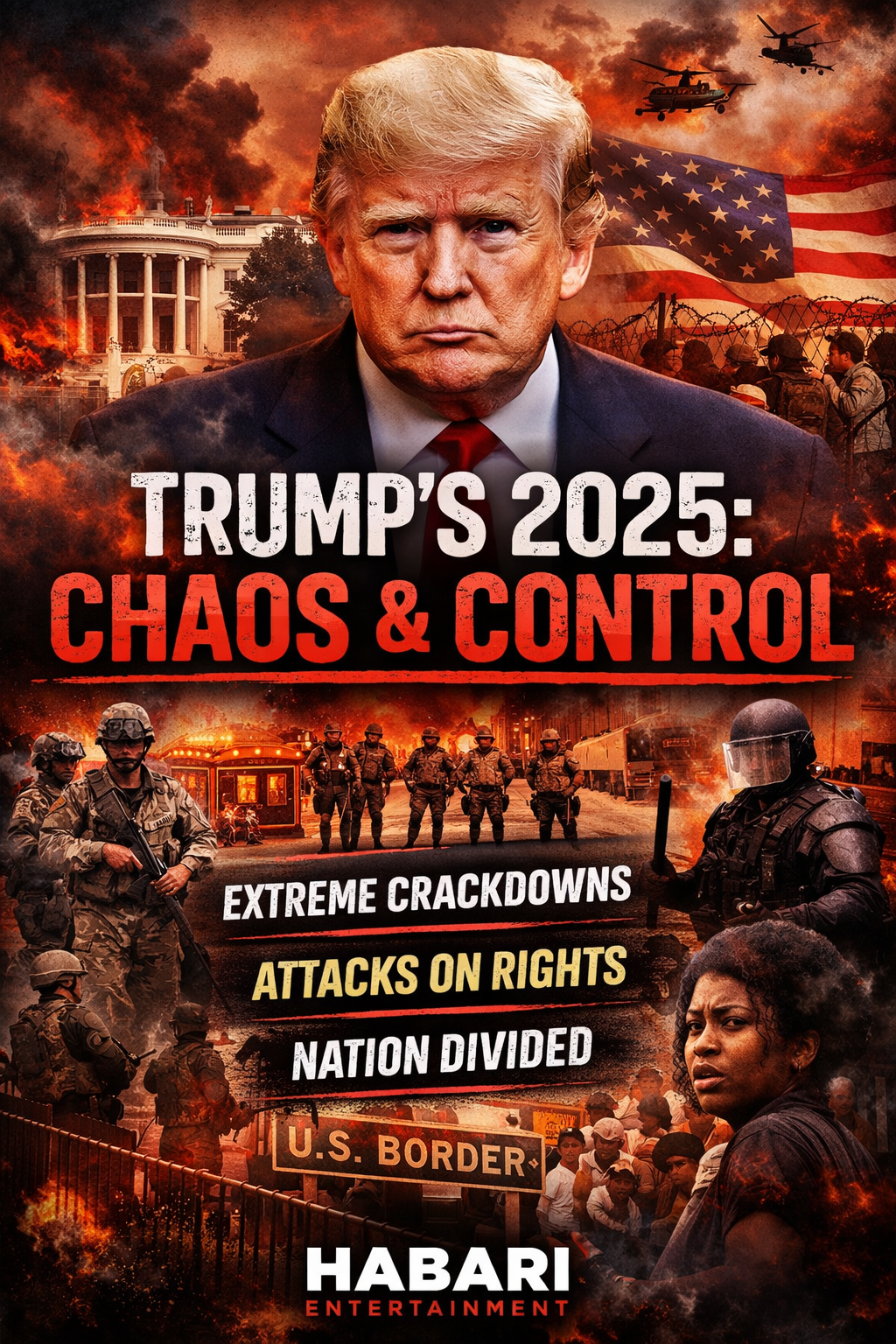
Donald Trump’s second term in 2025 didn’t just pick up where his last one left off — it exploded into a whirlwind of unprecedented executive action, legal battles, and cultural clashes that have shaken the foundations of American governance.
In a strategy critics have bluntly compared to Project 2025 — the blueprint for consolidating presidential power — Trump has relied on executive orders and emergency declarations to enact sweeping changes. The result: a nation deeply polarized, constitutional norms strained, and millions of Americans left to question the limits of presidential authority. (Congresswoman Zoe Lofgren)
Immigration & Border Security: Emergency Declarations & Self-Deportation Apps
Within days of entering office, Trump invoked a national emergency at the southern border — reviving and escalating a strategy critics say bypasses Congress entirely. (The White House)
He also shut down the existing asylum-processing CBP One app and relaunched it as “CBP Home, repurposed to facilitate self-deportation — a stark reversal of its original intent. (Wikipedia)
Alongside these actions, Trump issued executive orders aimed at redefining immigration enforcement, including broader expedited removal powers and penalties for unauthorized immigrants, which were challenged in federal court. (Wikipedia)
Energy & Environment: Emergency Power for Fossil Fuels
Trump declared a National Energy Emergency and issued orders to roll back Biden-era climate protections and clean energy policies, favoring oil, natural gas, and coal expansion. The administration also paused new offshore wind leases and withdrew the U.S. from major international climate commitments. Critics warn these measures will accelerate climate change and weaken long-term economic stability. (whitehouse.gov overview; multiple media coverages)
Meanwhile, proponents hail lower fuel prices as evidence of “energy independence,” even as environmentalists argue the gains are short-lived and socially harmful.
Economy & Trade: Deregulation & Protectionism
The administration embarked on what it calls a massive deregulation push, including ambitious targets to roll back far more rules than it imposes. Trump paired this with an aggressive “Buy American, Hire American” agenda and frequent tariff threats against trading partners.
These moves reflect a nationalistic trade philosophy that critics say alienates allies and endangers global market stability — even as administration officials argue they put American workers first.
Cultural & Social Policy: Targeting Gender, Race & DEI
Trump’s cultural agenda has been nothing short of combative, targeting LGBTQ+ rights and diversity programs with a sweeping set of executive actions that rescind anti-discrimination protections and ban federal DEI (diversity, equity, and inclusion) efforts. (Wikipedia)
One of the most explosive actions was an executive order defining sex as an immutable binary, eliminating gender identity recognition in federal policy. (Wikipedia)
Further, the administration’s healthcare posture has drawn fierce opposition. A coalition of 19 states has sued the federal government over plans to dramatically restrict gender-affirming care, arguing the policy oversteps government authority and harms vulnerable youth. (The Washington Post)
These moves are not marginal tweaks — they represent a coordinated assault on civil rights frameworks and the federal government’s role in protecting minority communities.
On employment policy, the Equal Employment Opportunity Commission (EEOC) shifted its priorities toward claims by white men while deprioritizing discrimination complaints from transgender individuals — a significant departure from decades of civil rights focus. (The Washington Post)
Federal Government Overhaul: Workforce Chaos & Emergency Powers
Trump pursued a regulatory freeze, authorized incentives for federal workers to leave, and ordered a broad federal workforce reshaping that critics slammed as punitive and destabilizing. (News From The States)
He also declared fentanyl a Weapon of Mass Destruction, another emergency framework designed to circumvent normal policymaking — raising serious questions about the escalation of executive authority.
Supreme Court rulings backing these actions have left legal observers alarmed that the judiciary is effectively granting the executive branch nearly unchecked power.
Foreign Policy: Pressure on Ukraine & Global Retracement
Internationally, Trump’s policies represented a sharp departure from traditional U.S. foreign policy.
The administration pressured Ukraine to accept peace terms favorable to Russia, prompting critics to accuse the White House of siding with authoritarian interests over democratic allies. (multiple geopolitical commentaries)
At the same time, Trump openly challenged global institutions like the IMF and World Bank, framing them as obstacles to sovereign economic policy.
Conclusion: America at a Breaking Point
Looking across 2025, it’s clear this presidency has been far more than conventional conservative governance — it has been an all-out assault on institutional checks and balances, civil rights, and democratic norms.
Promises that prices would fall and everyday life would improve sit in stark contrast to mounting costs in housing and food — issues the administration dismisses as unimportant. Legal scholars and public discourse observers have watched federal authority expand while ordinary Americans grapple with harsh enforcement policies, deportations, and aggressive immigration crackdowns.
Communities of color — including Somali, Cuban, Mexican, Black, and Brown Americans — have been singled out in rhetoric and policy, fueling fear, alienation, and nationwide protests. One international news review cataloged a year marked by pervasive racism, misogyny, and inflammatory remarks from the president that go beyond policy disagreements and into personal attacks on whole groups of people. (The Guardian)
Meanwhile, federal agencies like the EEOC have pivoted toward a politically charged enforcement agenda, leaving civil rights advocates to warn of erosion in workplace protections. (The Washington Post)
Across every front — domestic policy, cultural battles, foreign affairs, and governance itself — this administration’s first year has been more extreme, more fractious, and more chaotic than even its harshest critics expected. Whether this trajectory continues will depend not just on future elections, but on whether institutional and civic resistance can withstand a presidency that increasingly treats constitutional limits as optional.




More Stories
ICC President Meets Belgian Ministers Over Sanctions and Court Independence
ICC Welcomes 2026 Sakharov Prize Amid Sanctions Against Court
Phoenix Youth Art Contest Invites Students to Design Cholla Library Mural